about this letter
2 Timothy
Grace and peace to you, whoever you are, as you take up this letter of mine and mean to walk through it slowly, a little each morning. I am glad of it. Some things are best taken as bread is taken — broken small, chewed well, received day by day.
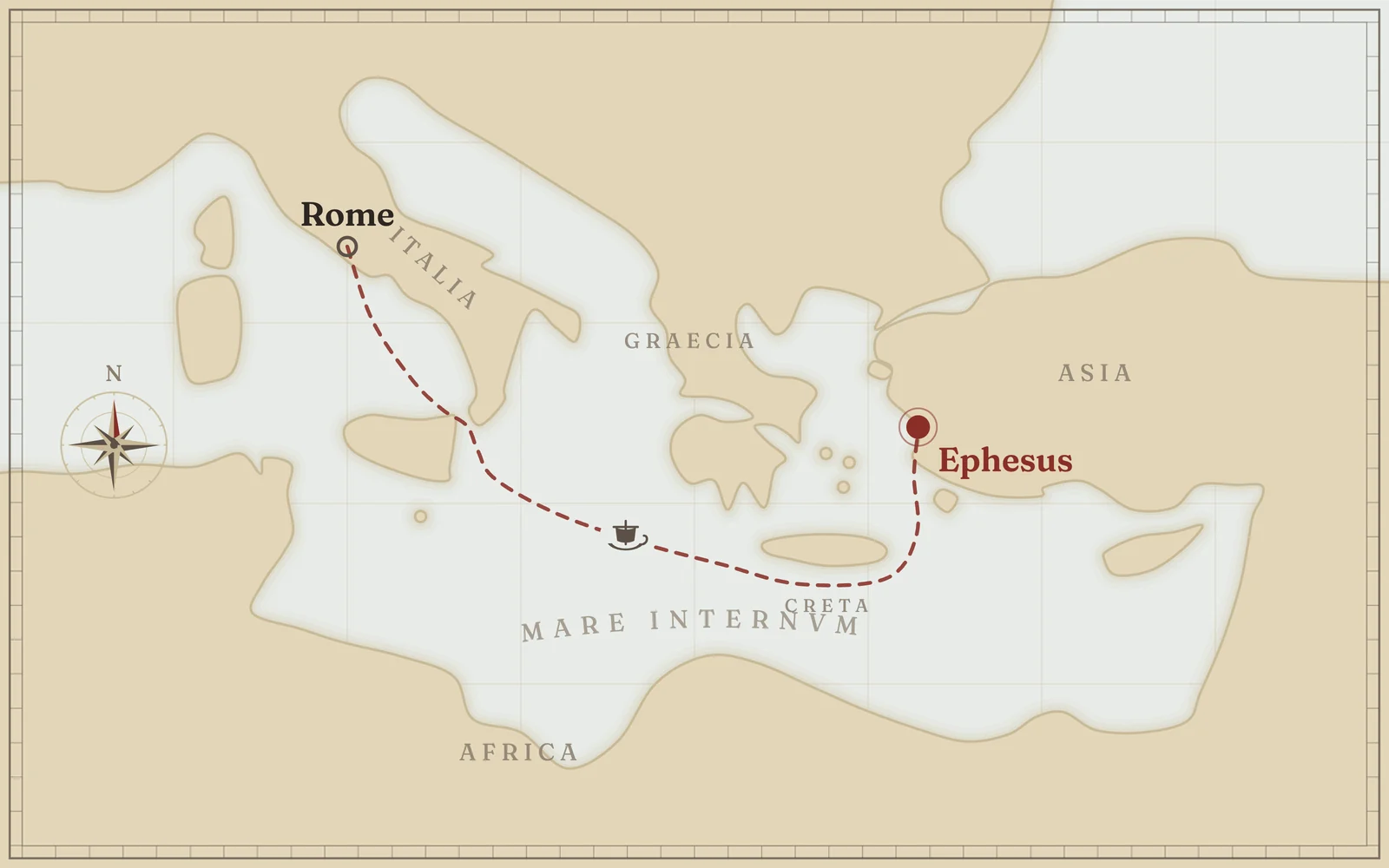
I wrote this to Timothy, my true child in the faith (2 Timothy 1:2), and I will tell you plainly: when I set these words down I did not expect to write him many more. The time of my departure had come (2 Timothy 4:6). I was in chains in Rome, cold, and most had left me. And into that I wanted to say to my son the things a father says when he knows the hour is late — not many things, but the true things, the ones that must not be dropped.
So I told him: fan into flame the gift God gave you (2 Timothy 1:6). Do not be ashamed. Guard what has been entrusted to you. Suffer for the gospel and do not flinch from it. Hold to the sacred writings that can make you wise unto salvation (2 Timothy 3:15). Preach the word whether it is welcome or not (2 Timothy 4:2). I was not afraid to lay a weight on him, because I knew the One who would carry him under it.
Here is the one thing I would have you carry as you read, and it is the thing I clung to myself in that cold room: I know whom I have believed, and I am convinced that he is able to guard until that day what has been entrusted to me (2 Timothy 1:12). Timothy's courage did not rest on Timothy. Mine did not rest on me. Read every morning's portion asking not first am I strong enough? but is he faithful? — for if we are faithless, he remains faithful, for he cannot deny himself (2 Timothy 2:13). Let that hold you as it held me.
The story behind this letter
This is the last letter I wrote that has come down to you, set down near the end of my life, around the time Nero reigned in Rome. I was a prisoner there — not, this time, in the rented house where I once received all who came, but held harder and awaiting a verdict I did not expect to survive. Winter was coming on. I had asked Timothy to come to me before it, and to bring my cloak, and the books, and above all the parchments (2 Timothy 4:13, 4:21). Many had scattered; Demas had loved this present world and gone (2 Timothy 4:10); only Luke remained beside me (2 Timothy 4:11). That is the room from which these words come.
Timothy received it — a younger man, sincere in faith, which had lived first in his grandmother Lois and his mother Eunice before it lived in him (2 Timothy 1:5). He was leading the church at Ephesus, and he was hard-pressed: false teachers were spreading their talk like gangrene (2 Timothy 2:17), some were turning away, and Timothy himself seems to have been prone to timidity and to weariness. He needed a father's steadying hand, and I sent it.
The themes are the themes of a man near the end who wants nothing wasted: guard the gospel — keep the sound teaching, hand it to faithful men who can teach others (2 Timothy 2:2); suffer for it without shame, as a soldier, an athlete, a farmer suffers for what he serves (2 Timothy 2:3-6); stand on the Scriptures, which are breathed out by God and sufficient to equip you fully (2 Timothy 3:16-17); and endure, because Christ is faithful and the crown is real (2 Timothy 4:8).
Its movement is simple. It opens in warmth and remembrance, calling Timothy to courage and to unashamed suffering (chapter 1). It presses on to how a servant of Christ is to labor and endure and rightly handle the truth against error (chapters 2 and 3). It rises to a solemn charge — preach the word — and then turns quiet and personal at the last, a dying man's requests and greetings, closing with the confidence that the Lord stood by me and will bring me safe into his heavenly kingdom (2 Timothy 4:17-18). Read it, then, from courage through endurance to that last quiet peace. It is the shape of a whole life given to Christ, told to one who must carry it on.
There's more here than a single reading can hold — the questions behind the questions, the threads that run letter to letter. That's what a study room with Paul is being made for.